


Data Centers: A Looming Energy Crisis Threatening Your Electricity Bills

Across the United States, a silent but immense energy consumer is rapidly expanding its footprint, threatening to drive up electricity bills for millions of Americans. These are the massive data centers, the digital factories powering everything from streaming services to the burgeoning field of artificial intelligence (AI), and their voracious appetite for power is pushing states to confront a complex and politically charged issue: who pays for the infrastructure needed to keep the lights on for Big Tech?
With electric bills on the rise, pressure is mounting on states to insulate regular households and businesses from the significant costs associated with feeding the insatiable energy demands of tech giants like Microsoft, Google, Amazon, and Meta. While the exact impact of data centers on electricity bills remains challenging to definitively quantify, a growing chorus of consumer advocates and some regulatory bodies are questioning whether states possess the political will to hold these powerful corporations accountable for their proportional share of energy infrastructure costs.
More than a dozen states have already begun taking tangible steps. These initiatives range from pressuring the nation’s largest power grid operator to curb price increases to commissioning studies on the direct effect of data centers on electricity rates, and pushing data center owners to bear a larger portion of local transmission costs. The urgency is palpable. “Rising power bills are something legislators have been hearing a lot about. It’s something we’ve been hearing a lot about. More people are speaking out at the public utility commission in the past year than I’ve ever seen before,” said Charlotte Shuff of the Oregon Citizens’ Utility Board, a consumer advocacy group. “There’s a massive outcry.”
The Unprecedented Scale of Demand
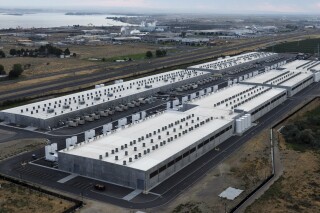
Unlike traditional industrial customers, some individual data centers can demand more electricity than entire major U.S. cities, such as Pittsburgh, Cleveland, or New Orleans. This unprecedented scale of consumption is forcing policymakers to fundamentally rethink a utility system historically designed to spread transmission costs proportionally among diverse consumer classes. “A lot of this infrastructure, billions of dollars of it, is being built just for a few customers and a few facilities and these happen to be the wealthiest companies in the world,” stated Ari Peskoe, who directs the Electricity Law Initiative at Harvard University. He warns that finding a solution is a “can of worms” that inevitably pits different ratepayer classes against each other.
However, not all officials agree on the extent of data centers’ role in escalating electric bills. Tricia Pridemore, a commissioner on Georgia’s Public Service Commission and president of the National Association of Regulatory Utility Commissioners, points to other contributing factors, including an already tightened electricity supply and increasing costs for essential infrastructure like power lines, utility poles, transformers, and generators. These expenses stem from utilities replacing aging equipment and hardening grids against extreme weather events. Furthermore, Pridemore notes that many data centers supporting the AI boom are still in the regulatory planning stages, and the Data Center Coalition, representing Big Tech firms, asserts its members are committed to paying their fair share.
Mounting Evidence and Calls for Accountability
Despite these nuanced perspectives, growing evidence suggests that the electricity bills of some Americans are indeed rising, effectively subsidizing the massive energy needs of Big Tech. This phenomenon is unfolding as the U.S. intensifies its global race for artificial intelligence superiority.
A recent report by data and analytics firm Wood Mackenzie, for instance, indicated that 20 proposed or effective specialized rates for data centers across 16 states are woefully inadequate to cover the true cost of constructing a new natural gas power plant. This suggests that unless utilities successfully negotiate significantly higher specialized rates, the financial burden for data center power consumption is likely being absorbed by residential, commercial, and other industrial ratepayers. Further bolstering this concern, Monitoring Analytics, the independent market watchdog for the mid-Atlantic power grid (PJM Interconnection), released research in June revealing that a staggering 70%—or $9.3 billion—of last year’s increased electricity cost in their region was directly attributable to data center demand.
States Respond to the Pressure
The financial impact has not gone unnoticed by state leaders. Last year, a coalition of five governors, spearheaded by Pennsylvania’s Josh Shapiro, pushed back vigorously against PJM Interconnection after power prices under its purview spiked nearly sevenfold, from $1.4 billion to $9.3 billion. They collectively warned that customers were “paying billions more than is necessary.” In response, Monitoring Analytics is advocating for a significant policy shift, proposing that data centers be mandated to procure their own power. In a recent filing, the watchdog argued this would avert a “massive wealth transfer” from average citizens to some of the world’s wealthiest tech corporations.
Across the nation, at least a dozen states are actively exploring mechanisms to make data centers responsible for higher local transmission costs. Oregon, a burgeoning data center hot spot, passed legislation in June empowering state utility regulators to develop new, presumably higher, power rates specifically for data centers. The Oregon Citizens’ Utility Board highlights clear evidence that data center costs are currently being diffused across all customers, at a time when some electric bills in the state have surged by 50% over the past four years, leading to a record number of disconnections. Similarly, New Jersey’s governor signed legislation last month tasking state utility regulators with studying whether ratepayers are enduring “unreasonable rate increases” to connect data centers and to propose a tailored rate structure for these facilities. In states like Texas and Utah, governors and lawmakers are proactively seeking to prevent a looming supply-and-demand crisis that could leave ratepayers either financially burdened or, in a worst-case scenario, without power.
Challenges and the Path Forward
Despite some legislative successes, doubts persist regarding the long-term effectiveness of states in fully shielding ratepayers. In Indiana, state utility regulators recently approved a settlement between Indiana Michigan Power Co., Amazon, Google, Microsoft, and consumer advocates, setting parameters for data center service payments. While Kerwin Olsen of the Citizens Action Council of Indiana lauded it as a “pretty good deal” with more consumer protections than state law provided, he cautioned that current state law does not compel large power users like data centers to publicly disclose their electric usage. This lack of transparency, he noted, will make it challenging to ascertain whether they are truly paying their fair share of transmission costs.
A March report by the Environmental and Energy Law Program at Harvard University underscored these concerns, questioning the inherent motivations of both utilities and regulators to prioritize ratepayer protection. The report suggests that both entities have strong incentives to attract large customers like data centers. To do so, utilities, whose rates are subject to regulatory approval, can offer “special deals to favored customers,” effectively shifting the costs of these discounts to regular ratepayers. The report highlighted that many state laws can shield the disclosure of these advantageous rates, further obscuring the true cost distribution.
In Pennsylvania, an emerging hub for data centers, the state utility commission is currently drafting a model rate structure for utilities to consider adopting. A core objective of this initiative is to ensure data center developers genuinely invest in the necessary infrastructure. As commission chairman Stephen DeFrank emphasized, “We’re talking about real transmission upgrades, potentially hundreds of millions of dollars. And that’s what you don’t want the ratepayer to get stuck paying for.” The battle for equitable energy costs, fueled by the accelerating demands of artificial intelligence, is far from over.