

President Trump Orders Sweeping Probe into “Debanking” Practices
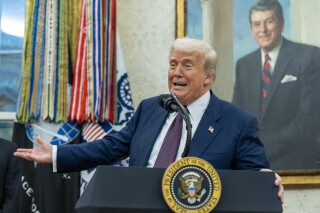
NEW YORK (AP) — In a decisive move, President Donald Trump signed an executive order on Thursday, August 7, 2025, compelling federal regulators to launch a sweeping investigation into allegations of “debanking” across the U.S. financial sector. The order specifically targets banks accused of discriminating against conservatives and industries such as gun manufacturers and cryptocurrency companies, invoking broad presidential powers to address perceived biases.

What is “Debanking”?
“Debanking” refers to the practice where financial institutions close existing accounts or decline to offer services to individuals or entities. President Trump has personally accused banking giants JPMorgan Chase and Bank of America of debanking him and his affiliated companies after he left office in 2021, though both institutions have vehemently denied these claims. In a recent CNBC interview, Trump asserted, “They totally discriminate against… me maybe even more, but they discriminated against many conservatives.”
Mandates of the Executive Order
The executive order mandates that federal bank regulators ensure banks do not discriminate against individuals or companies based on their political or religious beliefs. Furthermore, it directs these regulators to actively probe instances of alleged discrimination and refer any substantiated cases to the Department of Justice within 120 days. This directive could potentially expose banks to significant civil or criminal investigations, substantial fines, and other punitive measures.
Banks’ Justifications and Legal Rights
Banks typically justify account closures or loan denials by citing elevated risk profiles associated with certain clients or industries. The banking industry has historically argued for its constitutional right to select its clientele, provided such choices do not violate anti-discrimination laws like the Equal Credit Opportunity Act (ECOA), which prohibits discrimination based on race, ethnicity, religion, sex, and other protected statuses.
The Role of “Reputational Risk” and “Operation Choke Point”
A critical aspect of the executive order is its focus on “reputational risk”—a measure traditionally used by regulators where a bank’s association with certain industries or individuals could damage its public image or invite regulatory scrutiny. This type of government-directed debanking gained prominence during the Obama administration’s “Operation Choke Point,” where the Department of Justice advised banks to avoid “high-risk” sectors, including payday lenders and firearms manufacturers.
While banks view reputational risk as a legitimate factor in assessing a client’s overall financial health and potential liabilities, conservatives contend it has become a pretext for ideological discrimination. Former Treasury Department official Graham Steele notes, “Financial risk, and reputational risk, can be intertwined.” He points to examples such as Signature Bank’s 2023 collapse, partly attributed to its heavy exposure to volatile cryptocurrency companies, and Credit Suisse, which paid a half-billion-dollar fine in 2009 for money laundering, as illustrations of how reputational and financial risks can converge.
Trump’s Stance on Reputational Risk and Industry Reaction
Under Trump’s new order, federal bank regulators are explicitly instructed to remove “reputational risk” from their metrics used to gauge a bank’s safety and soundness. This aligns with the broader deregulation agenda favored by the banking industry, which generally prefers simpler, less prescriptive rules. Major bank lobby groups, in a joint statement issued Thursday, expressed a cooperative stance, stating, “It’s in banks’ best interest to take deposits, lend to and support as many customers as possible. Unfortunately, regulatory overreach, supervisory discretion and a maze of obscure rules have stood in the way as the (executive order) makes clear.” They also affirmed, “Today’s Executive Order helps ensure all consumers and businesses are treated fairly, a goal the nation’s banks share with the Administration.”
Impact on the Banking Sector and Cryptocurrency Industry
The banking sector, particularly since Trump’s return to the White House, has already begun phasing out explicit mentions of reputational risk in their internal policies, recognizing it as a potential liability. The cryptocurrency industry, a key beneficiary of this policy shift, has largely supported Trump’s 2024 campaign. Despite the Biden administration not overtly mandating debanking for crypto firms, its public expressions of concern were widely interpreted by banks as a signal to distance themselves, a move derided by Trump and his allies as “Operation Choke Point 2.0.”
Legislative Support and Future Implications
This executive action complements legislative efforts, such as the bill introduced by Senator Tim Scott (R-South Carolina), the chair of the Senate Banking Committee, which seeks to prevent bank regulators from factoring reputational risk into assessments of a bank’s health. Scott lauded the executive order, stating, “Debanking federally legal businesses and law-abiding citizens is un-American, and President Trump’s Executive Order is a critical step towards protecting Americans’ access to financial services.”
The unfolding impact of this executive order will be closely watched as it reshapes the regulatory landscape for banks and potentially alters the relationship between financial institutions and controversial industries in the United States.