


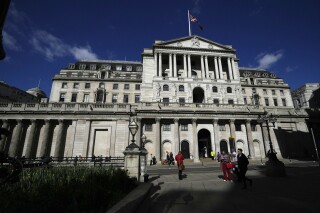
Bank of England Cuts Interest Rate to 4% Amidst Sluggish Economy
In a significant move to stimulate a flagging economy, the Bank of England’s Monetary Policy Committee announced Thursday a quarter-percentage-point cut to its main interest rate, bringing it down to 4%. This reduction, the fifth such cut since August 2024, positions the rate at its lowest level since March 2023.
A Divided Decision Reflects Economic Tensions
The decision, which was broadly anticipated by financial markets, passed with a narrow 5-4 vote among policymakers. This split highlights the persistent tension between the Bank’s primary mandate to control inflation and its growing concern over the United Kingdom’s subdued economic performance, which is further complicated by rising domestic taxes and potential economic disruptions stemming from U.S. President Donald Trump’s global trade policies.
Inflationary Pressures Persist Despite Rate Cuts
Despite the central bank’s efforts to ease borrowing costs, consumer prices remain stubbornly above target. Inflation registered at 3.6% in the 12 months leading up to June, significantly exceeding the Bank of England’s 2% target. However, the Bank maintains that this inflationary pressure is largely attributable to temporary surges in food and energy costs. It forecasts that consumer price growth will begin to recede later this year after peaking at around 4%, ultimately aligning with the 2% target by the second quarter of 2027.
UK Economy Faces Subdued Growth
The urgency for economic intervention is underlined by recent growth figures. The Bank of England estimates that the UK economy expanded by a mere 0.1% in the second quarter of 2025, a sharp deceleration from the 0.7% growth observed in the first three months of the year. Projections for the third quarter remain modest, with an anticipated growth rate of 0.3%.
Bank of England Governor Andrew Bailey, speaking to reporters after the rate announcement, acknowledged the prevailing challenges: “There are slightly more risks on the downside to activity. Economic growth is subdued, the labor market continues to loosen, and consumption growth may take longer to pick up.” His remarks echo concerns raised by the independent National Institute of Economic and Social Research, which earlier this week warned that the government might be compelled to raise taxes later this year due to the combination of slowing growth, escalating national borrowing costs, and demands for increased public spending.
Labor Market Shows Signs of Weakness
Further evidence of economic fragility is apparent in the labor market. Britain’s unemployment rate climbed to 4.7% in the three months through May, reaching its highest point in four years. This upward trend suggests that the cumulative effect of prior tax increases and global economic uncertainties is increasingly impacting employers’ confidence and hiring activities.
Government’s Strategy for Economic Prosperity
Rachel Reeves, the UK Treasury chief, affirmed the government’s commitment to fostering long-term economic prosperity. Since taking office in July 2024 alongside Prime Minister Keir Starmer, Reeves has outlined a strategy focused on bolstering economic growth and increasing tax revenue through investments in infrastructure, the negotiation of new international trade agreements, and the ambition to establish Britain as a leading hub for advanced technologies like artificial intelligence.
“This fifth interest rate cut since the election is welcome news, helping bring down the cost of mortgages and loans for families and businesses,” Reeves stated. Her comments underscore the government’s view that the central bank’s monetary policy adjustments are a crucial component in their broader agenda to invigorate the economy without resorting to unpopular tax increases or public spending cuts.