


Catastrophic Titan Submersible Implosion: Report Reveals Preventable Safety Failures and Regulatory Evasion
PORTLAND, Maine — The catastrophic implosion of the Titan submersible, which captivated global attention last year, was a direct consequence of preventable safety failures and deliberate attempts to circumvent regulatory oversight, a comprehensive U.S. Coast Guard report revealed on Tuesday. All five individuals aboard the submersible perished during its descent to the historic wreck of the Titanic in the North Atlantic, approximately 435 miles (700 kilometers) southeast of St. John’s, Newfoundland.
Flawed Safety Procedures and Negligence Identified
The U.S. Coast Guard, which convened its highest level of investigation in the wake of the June 18, 2023, tragedy, found OceanGate, the Washington state-based private company that owned and operated the Titan, had “critically flawed” safety procedures. The report, spanning over 300 pages, highlighted “glaring disparities” between OceanGate’s stated safety protocols and its actual practices. Stockton Rush, the CEO of OceanGate and one of the victims, was singled out by the Marine Board of Investigation for “negligence” that contributed to the deaths.
A Culture of Disregard for Safety
Investigators meticulously detailed OceanGate’s organizational culture, describing it as one that habitually “downplayed, ignored and even falsified key safety information” to bolster its reputation and evade scrutiny. The report cited numerous “red flags” and a “toxic workplace culture,” where the threat of termination was allegedly used to silence employees and contractors who voiced safety concerns. The Coast Guard concluded that OceanGate “strategically created and exploited regulatory confusion and oversight challenges” to operate the Titan entirely outside established deep-sea protocols.
Design Flaws and Poor Maintenance Contributed to Disaster
Beyond the corporate culture, the investigation found severe inadequacies in the submersible’s design, certification, maintenance, and inspection processes. A critical factor contributing to the implosion was OceanGate’s decision in 2023 to store the Titan outdoors through the Canadian winter. This exposure subjected the vessel’s hull to extreme temperature fluctuations, which the report indicated compromised its structural integrity. Furthermore, the submersible had notably not undergone independent review, a standard practice in deep-sea vessel operations.
Victims and Legal Aftermath
In addition to Stockton Rush, the implosion claimed the lives of French explorer Paul-Henri Nargeolet, British adventurer Hamish Harding, and two members of a prominent Pakistani family, Shahzada Dawood and his son Suleman Dawood. The family of Nargeolet, known as “Mr. Titanic” for his extensive work on the wreck, filed a more than $50 million lawsuit last year, alleging “terror and mental anguish” experienced by the crew and accusing OceanGate of gross negligence. The Marine Board acknowledged a challenge in its investigation: “significant amounts” of video footage evidence from witnesses could not be subpoenaed as the witnesses were not U.S. citizens.
Call for Stronger Oversight
Jason Neubauer of the Marine Board of Investigation emphasized the broader implications of their findings, stating, “There is a need for stronger oversight and clear options for operators who are exploring new concepts outside of the existing regulatory framework.” OceanGate, which suspended operations in July 2023, confirmed through a spokesperson, Christian Hammond, that it has been wound down and fully cooperated with the investigation, adding, “We again offer our deepest condolences to the families of those who died on June 18, 2023, and to all those impacted by the tragedy.”
The Tragic Final Descent
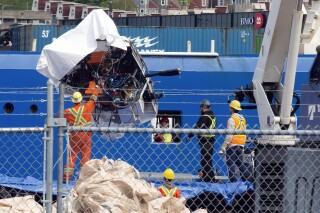
The Titan’s final dive commenced on a Sunday morning, June 18, 2023. Contact with its support vessel was lost approximately two hours into the descent. An extensive international search and rescue operation was launched that afternoon. Wreckage of the Titan was subsequently discovered on the ocean floor, tragically located about 330 yards (300 meters) from the bow of the Titanic. During hearings held in October 2024, the submersible’s lead engineer testified that he felt pressured to expedite the vessel’s readiness for dives and, several years prior to the disaster, had refused to pilot it himself, famously telling Rush, “I’m not getting in it.”
Note: No image links were provided in the input. If image links were available, they would be integrated into the article using the structure <img src=’link ảnh’ alt=’mô tả’>.