


China’s Alarming Response to Elon Musk’s Starlink: A Geopolitical Showdown in Space
ROME (AP) — Alarmed by the growing global footprint and perceived military implications of Elon Musk’s Starlink constellation, Chinese government and military scientists are actively researching and developing a range of aggressive countermeasures, from space-shooting lasers to supply-chain sabotage and specialized attack satellites. An Associated Press review of dozens of published papers reveals Beijing’s intense focus on neutralizing what it considers a significant threat to its national security.
Since Starlink’s inaugural launches in 2019, the satellite internet service, operated by Musk’s SpaceX, has rapidly ascended to dominance, now accounting for approximately two-thirds of all active satellites in orbit. Data from Jonathan McDowell, an astronomer at the Harvard-Smithsonian Center for Astrophysics, indicates that SpaceX currently operates over 8,000 active satellites, with ambitions to deploy tens of thousands more. This vast network provides cheap, fast, and ubiquitous connectivity even in remote areas, operating across more than 140 countries, including recent expansions into Vietnam, Niger, Somalia, the Democratic Republic of Congo, Pakistan, and securing a license in India.
A Perceived Military Threat
Chinese researchers view Starlink as a profound security risk, largely due to its deep ties to the U.S. intelligence and defense establishment. Concerns are amplified by the constellation’s potential use by adversaries in military confrontations and for sophisticated spying operations. As professors from China’s National University of Defense Technology articulated in a 2023 paper, “As the United States integrates Starlink technology into military space assets to gain a strategic advantage over its adversaries, other countries increasingly perceive Starlink as a security threat in nuclear, space, and cyber domains.” Despite Starlink not operating within China, simulations by researchers from China’s National Defense University in 2023 concluded that the constellation can achieve round-the-clock coverage of Beijing, underscoring the perceived omnipresence of the system.
Ukraine War: A Turning Point
The strategic value of Starlink became starkly apparent following Russia’s full-scale invasion of Ukraine in 2022. The conflict served as a critical turning point in global strategic thinking, demonstrating how Starlink could facilitate battlefield communications and power critical military assets like fighter and reconnaissance drones, providing a decisive ground advantage. However, this also highlighted a significant vulnerability: control over such vital infrastructure rested with a single individual. Elon Musk himself demonstrated this by refusing to extend Starlink coverage to support a Ukrainian counterattack in Russia-occupied Crimea, sparking international debate and deepening apprehensions among U.S. allies about reliance on a potentially unpredictable foreign businessman.
Beijing’s Multi-Faceted Countermeasures
In response, Chinese scientists have extensively explored a range of countermeasures, with nearly all of the 64 papers reviewed by the Associated Press in Chinese journals published after the Ukraine conflict began. These proposed strategies include:
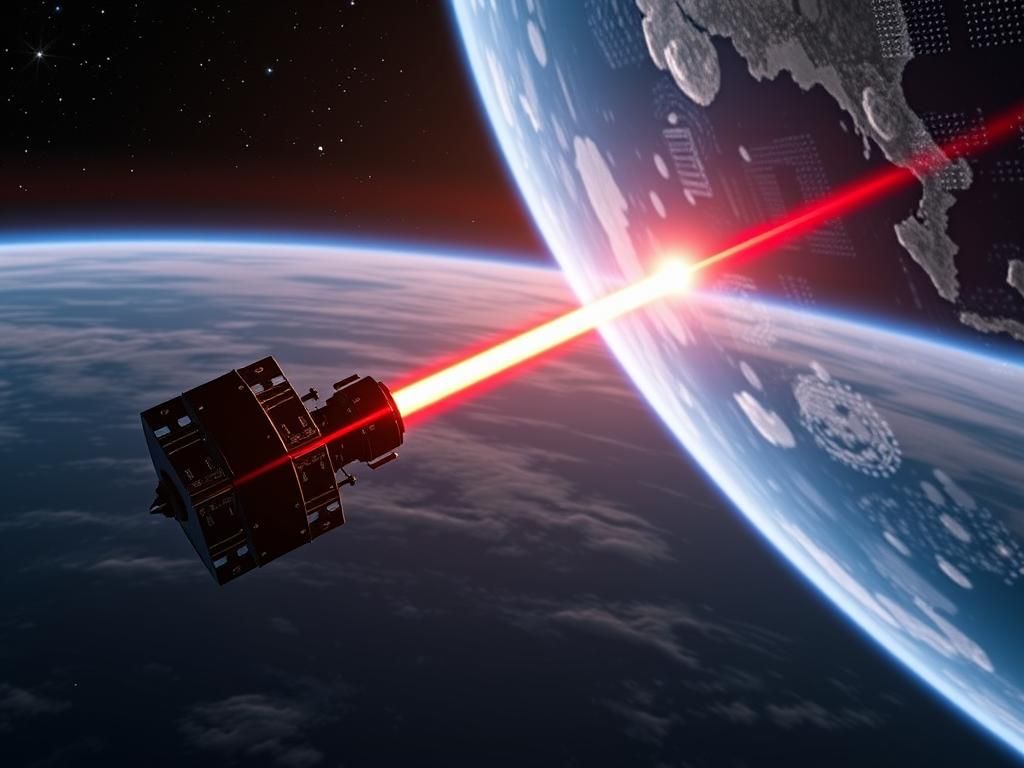
- Active Engagement: Suggesting “stealth submarines fitted with space-shooting lasers” to target satellites and custom-built “attack satellites armed with ion thrusters” to interfere with solar panels or damage batteries.
- Surveillance & Disruption: Proposing the creation of a fleet of satellites specifically designed to “tail Starlink satellites,” collect signals, and potentially deploy corrosive materials.
- Cyber & Supply Chain Warfare: Researchers from the government-backed China Industrial Control Systems Cyber Emergency Response Team identified vulnerabilities in Starlink’s supply chain, noting that the company has “more than 140 first-tier suppliers and a large number of second-tier and third-tier suppliers downstream,” with “limited supervision for cybersecurity.” This suggests potential avenues for supply-chain sabotage.
- Deception & Misdirection: Ideas include concocting “deep fakes to create fictitious targets.”
- Diplomacy & Regulation: Chinese academics have also advocated for using global regulations and diplomatic channels to contain Musk’s influence and Starlink’s expansion.
The Global Race for Space Autonomy
Starlink’s overwhelming first-mover advantage has created a near-monopoly, spurring a global scramble for viable alternatives. Amazon’s Project Kuiper, a rival initiative by Jeff Bezos, has launched its first batch of internet satellites, with 78 currently in orbit out of a planned 3,232. London-based Eutelsat OneWeb operates around 650 satellites. The European Union is investing billions in its IRIS2 initiative but remains significantly behind, with EU officials actively lobbying member states to avoid Starlink contracts to foster strategic autonomy.
China is concurrently pursuing its own ambitious satellite internet projects. In 2021, Beijing established the state-owned China SatNet company, tasked with launching the “Guowang” megaconstellation, intended to serve both domestic national security needs and compete internationally. As of now, 60 of a planned 13,000 Guowang satellites are in orbit. Separately, Qianfan, a company backed by the Shanghai government, has launched 90 of its projected 15,000 satellites. Qianfan has already secured a deal with the Brazilian government and is targeting markets in Kazakhstan, Malaysia, Oman, Pakistan, Uzbekistan, and across Africa.
This escalating strategic competition underscores a fundamental geopolitical shift: the recognition that control over space-based communications is not merely a commercial advantage but a critical element of national power, with profound implications for military capabilities and global influence.