


U.S. Steel Reverses Course: Granite City Works to Continue Raw Steel Processing Indefinitely
HARRISBURG, Pa. (AP) — In a significant and unexpected turn of events, U.S. Steel has announced its decision to continue raw steel processing indefinitely at its Granite City Works facility in Illinois. This announcement, made on Friday, effectively overturns an earlier plan that would have seen the plant cease these critical operations in the coming weeks, a move that had generated considerable apprehension among its workforce and union representatives.
A Swift Reversal Post-Nippon Steel Acquisition
This surprising policy shift comes barely three months after Japanese industrial behemoth Nippon Steel finalized its controversial $14.1 billion acquisition of U.S. Steel. While the deal received shareholder approval, it faced strong opposition from various quarters, including the influential United Steelworkers (USW) union and prominent political figures like former President Donald Trump. The controversy was further fueled by national security concerns and fears of job losses, ultimately leading to a unique arrangement: Nippon Steel granted the U.S. government a “golden share,” which gives Washington a decisive voice in strategic decisions impacting domestic steel production.
The “Solution” Remains Undisclosed
U.S. Steel has remained reticent regarding the specific reasons behind its change of heart. A company spokesperson merely stated, “our goal was to maintain flexibility, and we are pleased to have found a solution to continue slab consumption at Granite City.” The precise nature of this “solution” has not been detailed, prompting industry observers and stakeholders to speculate on the pressures that led to this pivotal decision.
United Steelworkers Claim Victory
The United Steelworkers union, a vocal critic of the Nippon Steel takeover and the initial plan to halt processing, was quick to attribute the reversal to its persistent efforts. The union had vehemently opposed U.S. Steel’s initial decision, interpreting it as an attempt to circumvent commitments made during Nippon Steel’s agreement with the White House. “We pushed back on USS’s flimsy excuse that it couldn’t supply slabs to Granite City for us to process,” the union asserted in a statement, highlighting their outreach to political leaders and plans for a protest rally. “We reached out to political leaders to remind them that this was the very situation we foretold.” The union reiterated its unwavering commitment: “We don’t go away without a fight – and we never will.” U.S. Steel, however, maintains that it is in full compliance with Nippon Steel’s White House agreement.
Granite City Works: A Vital Economic Hub
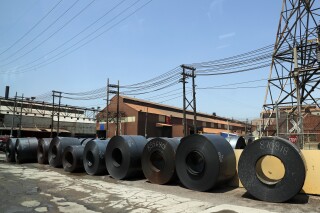
The Granite City Works plant, situated in southern Illinois just outside St. Louis, is a crucial pillar of the regional economy, providing employment for approximately 800 workers. These employees, whose jobs were protected from layoffs or pay reductions until at least 2027 under Nippon Steel’s initial White House agreement, now have the added assurance of continued raw steel processing. The facility is a specialist in producing rolls of sheet steel, which are essential components for the construction, container, pipe, and automotive industries.
A Brighter Future for Domestic Steel Production
Prior to this recent development, the Granite City plant had experienced a significant scaling back of its raw steel production. U.S. Steel idled its last operating blast furnace there in 2023, following the shutdown of another furnace in 2019. This had shifted the plant’s focus primarily to processing steel slabs from other U.S. Steel facilities, rather than producing raw steel itself. The renewed commitment to processing raw steel indefinitely marks a crucial win for labor and advocates of domestic steel production, ensuring a more robust operational future for the iconic Illinois plant amidst evolving ownership and geopolitical considerations.