


US Inflation Holds Steady Amidst Tariff Pressures and Political Scrutiny
WASHINGTON (AP) — The intricate dance of economic forces continued in July, as U.S. inflation maintained a stable pace. While a decrease in gas and grocery costs offered some relief, the rising prices of certain imported goods, largely fueled by new tariffs, kept overall consumer prices modestly above last year’s levels. This delicate equilibrium presents a formidable challenge for the Federal Reserve and has intensified political debate.
Inflation Figures: A Nuanced Picture
Data released Tuesday by the Labor Department revealed that the Consumer Price Index (CPI) recorded a 2.7% increase in July compared to a year prior, holding steady from the previous month. This marks an uptick from April’s post-pandemic low of 2.3%. Excluding the volatile food and energy sectors, core prices experienced a more significant climb, reaching 3.1% in July from 2.9% in June. Both overall and core inflation rates stubbornly remain above the Federal Reserve’s long-term target of 2%.
The Growing Shadow of Tariffs
The latest figures underscore a complex interplay of economic factors. While factors like slower rent increases and cheaper energy, particularly gasoline, have helped to moderate the overall inflation rate, President Donald Trump’s sweeping tariffs continue to exert upward pressure on imported goods. These tariffs, including a 10% universal duty introduced in April, alongside increased duties on products from nations like China and Canada, appear to be increasingly impacting consumer costs.
Economist Brian Bethune of Boston College highlights the mounting burden, noting that overall U.S. tariffs—calculated as duties paid by U.S. companies divided by total imports—have now reached a multi-decade high of 10%, with projections indicating further increases. Bethune warns that these escalating costs will inevitably be passed on to consumers, potentially manifesting as overt price hikes or “shrinkflation,” where product sizes are reduced without a corresponding price decrease. Additionally, companies absorbing tariff costs are likely to face squeezed profit margins, which could deter new hiring.
Federal Reserve’s Precarious Position
This intricate inflation landscape places the Federal Reserve in a challenging dilemma. Financial markets have increasingly anticipated an interest rate cut by the central bank at its upcoming September meeting, largely influenced by a sharp slowdown in job creation observed in the spring following the April tariff announcements. While a rate cut typically lowers borrowing costs for mortgages, car loans, and business investments, economists are divided on the Fed’s likely course of action. Some believe the weakening job market will compel a rate cut, outweighing inflation concerns, while others argue that core inflation’s persistent rise above 2% will lead the Fed to delay any such decision.
Powell Under Fire Amidst Calls for Rate Cuts
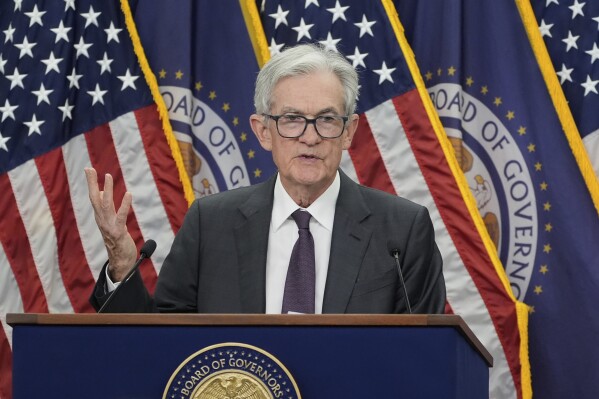
Federal Reserve Chairman Jerome Powell has previously indicated that worsening inflation could keep the Fed on the sidelines, a stance that has drawn fierce criticism from President Trump. The president has repeatedly defied traditional norms of central bank independence, openly demanding lower borrowing costs. On Tuesday, Trump renewed his attacks on Powell, even alluding to an unspecified lawsuit against the Fed related to the rising costs of its extensive building renovation.
Divergent Price Trends Across Categories
A closer examination of specific product categories reveals the varied effects of these economic pressures:
- Gas prices: Saw a 2.2% month-over-month decline in July and have fallen a significant 9.5% from a year earlier.
- Grocery prices: Slipped by 0.1% last month, though they remain 2.2% higher compared to a year ago.
- Imported goods: Show clearer signs of tariff impact:
- Shoe prices: Jumped 1.4% from June to July.
- Furniture costs: Rose 0.9% in July, now standing 3.2% higher than a year ago.
- Coffee: Almost entirely imported, has seen an almost 15% price increase over the past year, primarily due to troubled harvests overseas, with steep duties from Brazil potentially driving future hikes.
BLS Faces Internal Upheaval and Data Challenges
The Bureau of Labor Statistics (BLS), responsible for collecting and publishing this crucial inflation data, is also navigating a period of internal upheaval. The agency recently saw the firing of its head, Erika McEntarfer, following a jobs report that showed significantly lower hiring figures for May and June than initially reported. President Trump has since named E.J. Antoni, an economist known for his critiques of job reports, as her replacement. Adding to the BLS’s challenges is a government hiring freeze, which has forced the agency to collect approximately 18% fewer price quotes for inflation reports compared to earlier in the year. UBS economist Alan Detmeister suggests this reduction may lead to more volatile reports, though he maintains their long-term reliability.
Businesses Adapt, Consumers Bear the Brunt
American businesses are employing diverse strategies to contend with these rising costs. Princess Awesome, a clothing company specializing in matching children’s and adult apparel, has seen its costs soar by 15% to 20% due to tariffs. CEO Rebecca Melsky notes the prohibitive expense of domestic production for their cotton blend fabrics. Rather than instituting across-the-board price increases, the company has added a “tip jar” option on its website, inviting customers to help defray costs, while also joining a lawsuit challenging the duties.
Contrary to President Trump’s assertion that foreign manufacturers would absorb the tariffs by reducing their prices, economists at Goldman Sachs estimate that through June, foreign companies have absorbed only 14% of the duties. The bulk of the burden has fallen on U.S. companies (64%), with consumers paying 22%. However, Goldman Sachs projects a significant shift by this fall, anticipating that consumers will bear two-thirds of the tariff costs, while foreign exporters pay a quarter, and U.S. companies absorb less than a tenth.
Major Corporations Announce Price Hikes
Many major corporations are already implementing price increases, with these adjustments typically not yet reflected in July’s inflation report. Apparel giants like Ralph Lauren and Under Armour, along with eyewear company Warby Parker, have announced price hikes. Consumer products titan Procter & Gamble, parent company of brands like Crest and Tide, revealed late last month that it would raise prices by mid-single-digit percentages on approximately a quarter of its products starting in August. Walmart has also confirmed price increases. Additionally, e.l.f. Beauty, a cosmetics maker with a majority of its production in China, implemented a $1 price increase across its entire product assortment on August 1st—its third price hike in 21 years—directly attributing the move to tariff costs.