



Trump’s Economic “Golden Age” Faces Early Headwinds: Jobs Dwindle, Inflation Rises
WASHINGTON (AP) — Despite President Donald Trump’s grand promises of an economic “golden age,” recent indicators paint a potentially troubling picture, revealing the initial impacts of his sweeping policy changes. More than six months into his term, the comprehensive restructuring of America’s trade, manufacturing, energy, and tax systems through a blitz of tariff hikes and a new tax and spending bill is beginning to show its effects on the nation’s financial health.
Key economic figures released this week highlight areas of concern: job gains are conspicuously dwindling, inflation is experiencing an upward tick, and overall economic growth has decelerated compared to the previous year. While President Trump is quick to claim credit for any positive developments, he has also been swift to deflect blame for emerging challenges, often casting doubt on the very data reporting these trends.
A Bleak Jobs Report and Presidential Response

The latest jobs report, released on Friday, proved particularly challenging. It revealed that U.S. employers have shed a notable 37,000 manufacturing jobs since the administration’s tariff launch in April, directly undermining earlier White House assertions of a resurgent factory sector. Furthermore, net hiring has plummeted over the past three months, with July adding just 73,000 jobs, June only 14,000, and May a mere 19,000. This combined figure represents a staggering 258,000 fewer jobs than previously indicated, starkly contrasting with last year’s monthly average of 168,000 new positions.
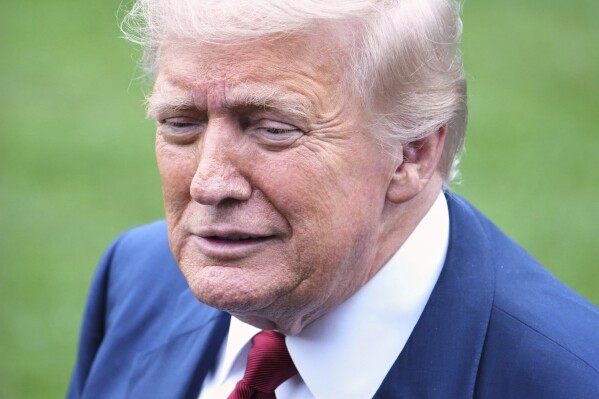
In response to this decidedly bleak data, President Trump took to Truth Social, stating, “Important numbers like this must be fair and accurate, they can’t be manipulated for political purposes.” Without offering evidence, he concluded, “The Economy is BOOMING,” and subsequently fired the head of the agency responsible for producing these crucial monthly job figures.
Inflationary Pressures and Slowed Growth
Beyond employment, an inflation report on Thursday indicated that prices have risen 2.6% over the year ending in June, an increase from 2.2% in April as measured by the personal consumption expenditures price index. This uptick was notably driven by price jumps in heavily imported items such as appliances, furniture, and toys and games from May to June. Concurrently, a Wednesday report on gross domestic product (GDP), the broadest measure of the U.S. economy, showed an annual growth rate of less than 1.3% during the first half of the year, a sharp decline from the 2.8% growth recorded last year.
Guy Berger, a senior fellow at the Burning Glass Institute, which studies employment trends, commented on the situation: “The economy’s just kind of slogging forward. Yes, the unemployment rate’s not going up, but we’re adding very few jobs. The economy’s been growing very slowly. It just looks like a ‘meh’ economy is continuing.”
Political Gambles and Public Perception
President Trump’s aggressive economic strategies, encompassing tariffs, executive actions, spending cuts, and tax code changes, inherently carry significant political risks. These risks are amplified if his policies fail to deliver tangible prosperity to the middle class, especially as the full inflationary impact of his tariffs is not expected to be fully felt until 2026, coincidentally an election year for many Trump allies in Congress.
“Considering how early we are in his term, Trump’s had an unusually big impact on the economy already,” noted Alex Conant, a Republican strategist at Firehouse Strategies. White House spokesman Kush Desai, however, offered a more optimistic outlook, stating, “President Trump is implementing the very same policy mix of deregulation, fairer trade, and pro-growth tax cuts at an even bigger scale – as these policies take effect, the best is yet to come.”
Public perception, however, appears to be wavering. A July poll by The Associated Press-NORC Center for Public Affairs revealed that only 38% of adults approve of Trump’s handling of the economy, a noticeable drop from the 50% approval recorded at the end of his first term.
Clash with the Federal Reserve
Adding another layer of complexity, President Trump has actively sought to attribute any economic woes to Federal Reserve Chair Jerome Powell, advocating for cuts to benchmark interest rates despite concerns that such actions could exacerbate inflation. He has publicly endorsed two Fed governors, Christopher Waller and Michelle Bowman, who voted for rate cuts at a recent meeting, even though their stated rationale stemmed from worries about a slowing job market, not a desire to boost growth as Trump suggests. This push for lower rates, alongside the volatile tariff policy, represents a major economic gamble with uncertain long-term consequences, potentially leading to further disruption rather than the promised boom.