


NBA Commissioner Adam Silver Laments Caitlin Clark Becoming a “Political Football”
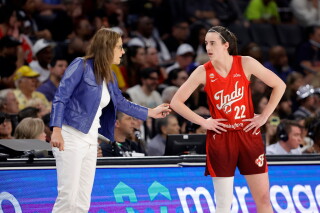
NEW YORK – NBA Commissioner Adam Silver has publicly lamented that WNBA phenom Caitlin Clark has become a “political football,” caught in the crosscurrents of intense debates surrounding officiating, physical play, and broader societal issues within women’s basketball. Silver’s remarks, made Thursday during an onstage conversation with Andrew Ross Sorkin at the Game Plan Summit presented by CNBC and Boardroom, highlight the escalating scrutiny on the league’s most talked-about rookie.
The Incident That Ignited the Debate
The contentious discourse reached a boiling point following a June 24 game between Clark’s Indiana Fever and the Phoenix Mercury. During the second quarter of that highly anticipated matchup, Mercury forward Alyssa Thomas delivered a forceful blow to Clark’s throat with her fist. Although initially uncalled by game officials, the incident quickly gained national attention, prompting the WNBA to retroactively upgrade the play to a flagrant foul and issue a one-game suspension to Thomas for “recklessly making contact.”
Thomas later publicly stated the contact was accidental and revealed she had received a barrage of death threats and racial slurs in the aftermath. She further criticized WNBA Commissioner Cathy Engelbert, suggesting the league had not done enough to protect its players from such vitriol. Both Clark and Fever coach Stephanie White have since condemned the threats directed at Thomas, emphasizing the need for respectful dialogue even amidst fierce competition.
Beyond the Foul: Silver’s Perspective
“Ultimately, the issues around Caitlin Clark are not largely about officiating,” Silver stated, distancing the core problem from mere rule enforcement. “And that particular incident is not about whether a foul should have been called at the time in the game or whether that was ultimately a flagrant on review.”
Clark’s Impact and the Broader Discourse
Clark, who captivated the nation with her record-breaking collegiate career at the University of Iowa, has brought an unprecedented spotlight to the WNBA. Her arrival has coincided with a significant surge in league popularity, translating into record-breaking ticket sales and skyrocketing television ratings. Games featuring Clark’s Indiana Fever routinely draw millions of viewers, a stark contrast to previous seasons. However, this amplified visibility has also made her a lightning rod for polarizing conversations that extend beyond the hardwood, frequently touching on themes of race, gender, media coverage, and political ideologies.
“I have come to know Caitlin really well,” Silver added. “She’s an incredible player and also an incredible person. And she wants to focus on being the best player she can. She has become a bit of a political football in this country, and I think it’s incredibly unfair to her. I don’t think that issue is ultimately about officiating. It’s become political ping-pong with her. And she’s a young woman who’s trying to improve her game.”
Addressing Officiating and the Road Ahead
While acknowledging the underlying currents, Silver did not shy away from addressing potential areas of improvement within the WNBA itself. “Do we need to improve WNBA officiating? No doubt about it,” he conceded, indicating that the league is attentive to calls for better game management, even as he urged a focus on the broader implications of Clark’s controversial initiation into professional basketball. The ongoing debates underscore the complex challenges and opportunities that arise when a rising star transcends sports to become a figure of national discussion.