Veteran CBS Anchor Scott Pelley’s Fiery Public Confrontation Becomes a Workplace Fantasy for Many
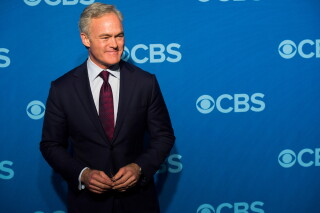
The Defiant Exit: Scott Pelley’s Public Challenge to CBS Management Ignites Workplace Debate
New York, NY – For many, the idea of openly challenging a disliked boss remains a silent workplace fantasy. But for Scott Pelley, the acclaimed “60 Minutes” correspondent, that fantasy became a very public reality this week, culminating in a dramatic exit that has ignited conversations about corporate authority and employee frustration across America. Pelley, known for his distinguished career spanning decades in broadcast journalism, delivered a scathing critique of CBS management, turning a high-stakes internal meeting into a widely reported showdown.
The Showdown at CBS News:
The incident unfolded during a Monday staff meeting for the venerable news program “60 Minutes,” a revered cornerstone of television journalism and a Sunday night institution for nearly six decades. Pelley reportedly confronted Nick Bilton, the newly appointed executive producer, who had been brought in by Bari Weiss, CBS News’ editor-in-chief since October. Pelley’s pointed questions targeted the recent firings of Bilton’s predecessor, Tanya Simon, and correspondents Sharyn Alfonsi and Cecilia Vega. According to reports from the media news site Status, Pelley accused management of “murdering” the program, declaring of Weiss, “She has no qualifications for her job,” and then turning to Bilton, adding, “You have slender qualifications for this job.” Bilton, in turn, characterized Pelley’s outburst as an “ambush” marked by “remarkable incivility and contempt,” swiftly leading to Pelley’s termination.
A Universal Fantasy Realized:
While Pelley‘s career afforded him a glamorous, globetrotting, seven-figure position, his defiant act struck a chord with countless everyday workers who have experienced similar frustrations with management. “That’s the American dream — to be able to tell off your boss and walk out the door,” expressed Zach Tyra, a 40-year-old data analyst from Jones, Oklahoma. Tyra, who resonated with Pelley’s stance after his own encounters with a “clueless” former boss, lamented, “I couldn’t do what Scott Pelley did because I didn’t have the safety net or the resources or the network that he has. I couldn’t tell my boss to stick it. I just had to sit there and eat it.”
Echoes in Workplaces Nationwide:
Pelley’s measured baritone may have been polished by years on air, but his backtalk resonated with the simmering rage many feel towards incompetent leadership. Parry Headrick, 57, who now runs a public relations firm in Boston, recalled his early days as a reporter at a small newspaper. Headrick had painstakingly built trust with a family impacted by toxic waste, only to see his editors publish a headline reducing a sick child to a “toxic boy.” This editorial decision shattered his faith in his superiors, leading him to scream at the publisher and editor-in-chief before quitting. “I lost my goddamn mind when they did that. And the story with Pelley resonated so hard specifically because of that,” Headrick shared, adding, “There exists in most Americans the desire to speak truth to power.”
Clare Haynes, 55, from Royal Leamington Spa, England, had her own “Pelley moment” two decades ago as a middle manager at a nonprofit. Hired to drive innovative change, she found every suggestion dismissed. When her boss attributed resistance to his superior, Haynes sharply retorted, “Are you saying you’re too weak to ask?” The boss was stunned into a minute of silence. While Haynes survived, staying for three more years, the incident marked her as a “maverick,” a label that carried its own price. Today, she runs a coaching firm, helping executives navigate difficult workplace conversations, a testament to the enduring impact of such confrontations.
In Amsterdam, Johan Konst, 34, found liberation seven years ago after years of high-stress, hard-selling advertising roles he no longer believed in. He delivered a blunt, profanity-laced message to his boss and was promptly dismissed, receiving a severance check. “It’s the best thing that ever happened to me,” Konst stated, acknowledging, “At some point, this had to happen.”
Journalism’s Unique Culture and Universal Grievances:
The news business, with its inherent culture of challenging authority and giving voice to the voiceless, often sees such confrontations play out. Journalists, accustomed to asking tough questions of others, sometimes direct that scrutiny inward. The threshold for what constitutes acceptable discourse versus a fireable offense, however, remains as varied as the workplaces themselves. As Headrick noted, “In the real world, there are layers of politeness and cordiality that don’t really exist in journalism.” Yet, the underlying sentiment — the desire to “push back on something larger” — is a universal human experience. Pelley’s actions, whether seen as reckless or heroic, have undeniably tapped into a widespread yearning for authenticity and accountability in the workplace.