Kentucky Plant Secures Exclusive Global Role for iPhone and Apple Watch Glass, Fueling Local Growth
Kentucky Town Becomes Exclusive Global Hub for iPhone Glass Production with $2.5 Billion Apple Investment
HARRODSBURG, Ky. (AP) — The small town of Harrodsburg, Kentucky, a community of just over 9,000 residents, is now at the heart of Apple’s global supply chain. Specialty glass maker Corning Inc. has announced that its Harrodsburg plant has been selected to become the exclusive worldwide producer of the durable cover glass for every iPhone and Apple Watch sold by the tech giant. This monumental decision is backed by a substantial $2.5 billion commitment from Apple, designed to dramatically boost the plant’s capabilities and workforce.
Massive Expansion and Economic Boost for Central Kentucky
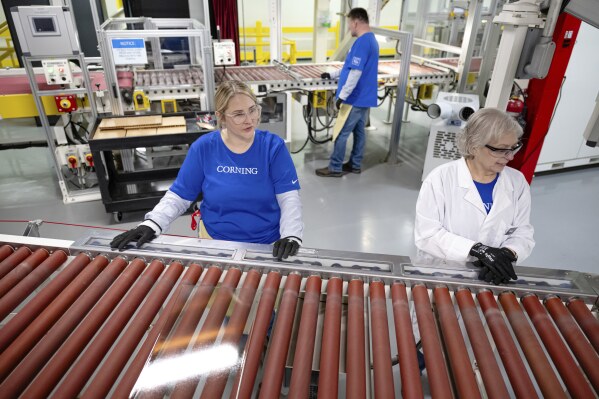
Corning Inc. revealed on Friday its plans to triple production capacity at the Harrodsburg facility, alongside a significant 50% increase in its workforce. This expansion will see the current staff of nearly 350 employees grow to at least 500, providing a vital economic “shot in the arm” for the central Kentucky region. This initiative forms a core part of Apple’s broader, massive commitment to strengthen American manufacturing, a move that has garnered bipartisan support from both Republican President Donald Trump and Democratic Kentucky Gov. Andy Beshear.
A Partnership Forged Since the Original iPhone
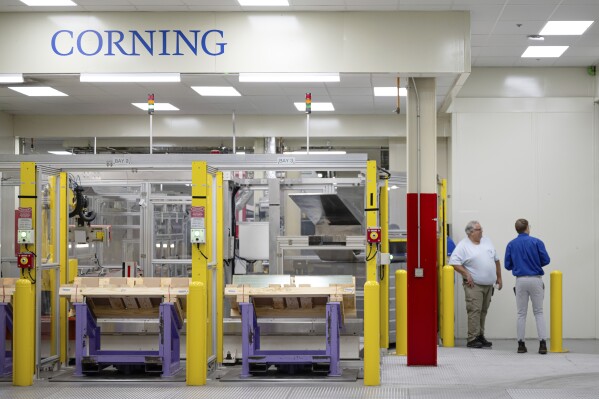
The partnership between Apple and Corning is not new; it dates back to the very inception of the iPhone. The Harrodsburg plant played a crucial role in creating the cover glass for the original iPhone when it launched in 2007. This deep-rooted relationship has now evolved into an unparalleled level of integration. By the end of 2026, the Harrodsburg facility will be entirely dedicated to manufacturing for Apple, becoming the sole global source for its device cover glass. While the precise details of Apple’s $2.5 billion commitment remain proprietary, Corning confirmed it encompasses revenue, advanced technology, dedicated development teams, and innovative manufacturing process development.
A Dream Realized for Long-time Employees
For employees like Tommy Shirley, a maintenance worker who has been with the plant since 1989, this announcement signifies a dream realized. Shirley, whose family history is interwoven with the plant — his grandfather helped construct the factory in 1952, and his father began working there in 1964 — expressed profound pride and relief. “We’ve prayed for this,” Shirley told reporters, emphasizing the desire for “stability for our employees” and “expansion.” He highlighted the global reach of their local work: “The products that we make, they impact people’s lives all over the world… We’re going to make devices right here in my hometown that’s going to affect people’s lives all over the world.”
Innovation and Future Development
Looking ahead, the deepened collaboration will also feature the establishment of an innovation center within the Kentucky plant. This center will bring together leading scientists and engineers from both companies, fostering world-class research and development aimed at pushing the boundaries of material science for future Apple products. Hal Nelson, Corning’s Chief Operating Officer, underscored the strategic vision: “Together, we are building a next-generation U.S. manufacturing platform to deliver high-performance materials for Apple’s iconic products.” Apple CEO Tim Cook echoed this sentiment, stating that the teamwork will result in “the largest and most advanced production line ever created for smartphone glass,” ensuring that “any customer anywhere in the world who buys a new iPhone or Apple Watch will be holding precision glass made right here in Kentucky.”
This expansion solidifies Corning’s long-standing role as a critical supplier for Apple and marks a pivotal moment for American manufacturing, demonstrating a significant investment in domestic production and high-tech innovation in the heartland.